
This is the second article in a series on what lies “under the hood” of my therapy as a specifically Catholic therapist. By “under the hood”, I mean the principles that are almost never mentioned during sessions because doing so would detract from the practical work of psychotherapeutic healing, even though these principles guide all my work with clients. These principles also help me sort out what is true and good in secular therapy models from what is false and evil.
My last article explained why truth matters in psychology and emphasized our ability to know objective truth. In this article, I pick up from there and explain why a psychological model must be built upon an adequate view of what exists if that model is to be a healing one.
The Contents of Reality and Psychological Healing
A good basic description of mental health is possession of the abilities to accurately perceive reality, feel in accordance with these perceptions, and act in accordance with truth. There is no real healing without truth.
Palatable platitudes and patronizing pampering only create fleeting senses of well-being. Real healing can only be maintained when it is founded on reality. Along with possessing mental health as described here, obviously a therapist must also be kind, gentle, compassionate and other-oriented, so that the client can be helped to face difficult but necessary truths on the path to lasting healing.
Catholic therapists who want to accurately perceive reality can benefit greatly from studying and considering a traditional Catholic understanding of not only what reality is, but also what the contents of reality are and how they relate to one another. When Catholic therapists balance the importance of grasping reality with the perhaps equal importance of being empathetic, they can gently lead their clients to and through the truths that they need to face enroute to lasting healing.
What Are the Metaphysical and Ontological Stances of Secular Psychological Models?
When I was a graduate student in marriage and family therapy, I tried to find a secular therapy model that could possibly be reconciled with our Catholic faith because I did not want to needlessly reinvent the wheel.
In pursuing this, I figured that the model’s view of reality should allow for the things that we, as Catholics, know exist. Two areas of philosophical inquiry, metaphysics, the study of what exists, and ontology, the area of metaphysics concerned with the study of being, addressed my problem best.
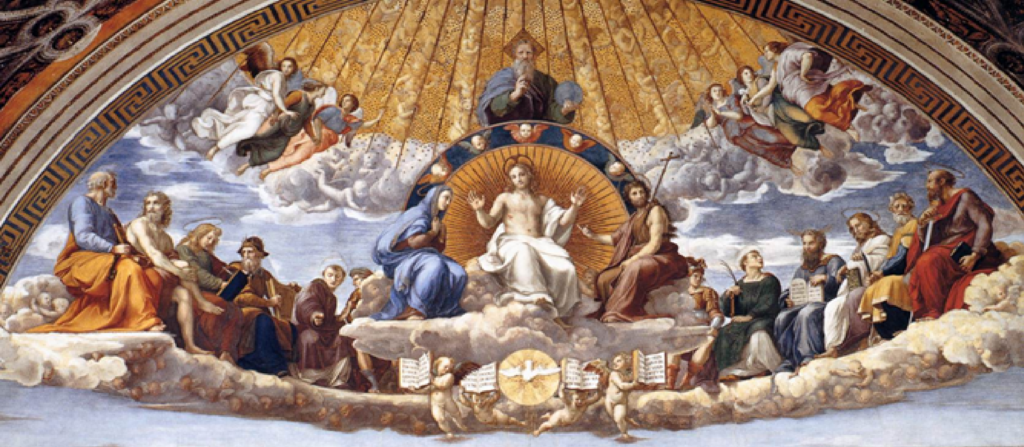
A traditional Catholic view of metaphysics and ontology can be found in St. Thomas Aquinas’ Summa Theologica, his commentary on Aristotle’s Metaphysics, etc. From these sources, one learns that St. Thomas developed an ontological hierarchy or hierarchy of being ordered from greatest to least as such: God, angels, humans, animals, plants, and inanimate matter. While the Catholic in the pew might take it for granted that, say, angels are the stuff of reality, most secular psychological models are silent on the topic.
Their silence left me wondering: Are they opposed to belief in invisible realities such as God and the angels? Do they allow for the possibility that these things exist? Why the silence on invisible realities? Do they not know that these things exist? Or do they rather think of people of faith as quaint and unenlightened for their belief in these things?
How Much Reality is There in Reality Therapy?

Amidst the common silence of secular psychological models on ontological matters, I was excited when I came across a psychological model called Reality Therapy. I thought that it might be easier to reconcile such a model with the Catholic faith, because it at least acknowledged that reality exists. I was so excited about this possibility that I got certified in Reality Therapy!
En route to certification, I did a practicum experience with the theory’s founder, William Glasser, M.D. While nothing in my training or my reading of his materials up to that point told me what his metaphysical or ontological positions were, I was finally able to ask him directly what his definition of reality was. His unsatisfactory reply went something like, “It is when you can no longer do what you want to do.” He continued, “For example, a person can go around committing crimes until the police bring reality to him and he finds himself in jail.”
Comparing this inadequate definition of reality with Aquinas’ hierarchy of being, I was disheartened. My disillusionment led me to see that my original skepticism of secular psychological models was not yet skeptical enough!
On another occasion, one of Dr. Glasser’s ontological views as related to the stuff of faith came out when he shared how he once told a group of Alcoholics Anonymous members that his “higher power” was “Counseling with Choice Theory”, his new preferred name for Reality Therapy.
It is not accidental that Dr. Glasser, whose concept of reality was deficient, effectively placed himself on par with God. In doing so, he rendered his theory extremely subjectivistic, much like many other flawed psychological systems.
What I learned from this is that when a Catholic therapist seriously probes the metaphysical and ontological foundations of a secular psychological model, the model’s inadequacy is eventually revealed. Even theories that initially seem compatible with Catholic thought often prove intellectually taxing to reconcile with the faith, because closer examination exposes significant metaphysical weaknesses.
In the case of Reality Therapy, belief in God is permitted, but belief in one’s own ideas as “God” is permitted as well. This is no small problem. The attempt to make oneself equal to God was the Original Sin, and any psychological model that implicitly sanctions this error is gravely flawed, regardless of its practical insights. Human pride is not the path to healing, and no therapeutic model can be fully healing if it rests on that foundation.
How “What’s Under the Hood” Gets Practically Applied in Therapy
My discernment of Reality Therapy in light of traditional Catholic philosophy was just one of many incidents in which I explored the metaphysical roots of secular psychological and psychotherapy models and found them lacking. As a result, I have had to create my own framework for therapy based on sound Catholic metaphysical and ontological thought. Some examples come readily to mind as I think about how Catholic metaphysics and ontology play out in my therapy practice, examples which showcase the principles of this framework in action.
Example One: Scrupulous Clients
Scrupulous clients, by definition, have a severely distorted view of God. They think of God as fault-finding, i.e., as seeking any opportunity to catch the client in a sin so that He can punish the client. This view of God stands in contrast to the real God, which is where Catholic metaphysical and ontological thought come into play.
As mentioned earlier, God is at the top of Aquinas’ hierarchy of being. He is pure act, and that act is love. As His creatures, we exist only because God continually wills our good. His justice, His mercy, and His compassion are not competing qualities but identical in His simple essence. To know God rightly, then, is to see that He is always willing the true good of his human creatures and their ultimate union with Him, who is Himself the Ultimate Good (Cf. ST I, q. 44, a. 1; ST I, q. 3, a. 1; ST I, q. 20, a. 1; ST I, q. 19, a. 2; ST I, q. 103, a. 8; ST I, q. 21, a. 4; ST I, q. 3, a. 7; ST I, q. 44, a. 4; ST I–II, q.3, a.8).
Most scrupulous clients want to see things according to reality rather than in their usual grossly distorted way. They are eager to know the real God. They don’t want to live in fear, especially not unnecessarily.
In time, scrupulous clients usually develop a trust in me on matters of Catholic philosophy and doctrine. Maybe this is because they know that I have an advanced degree in theology, but I think it is also perhaps because I will, for example, show them relevant excerpts from the Catechism right there during our sessions when they need that.
Scrupulous clients come to see that I seek to be true to Catholic dogma just like them, but that somewhere along the way in their lives, they picked up some misinterpretations or misunderstandings of Catholic doctrine. Together, we look at the sources of their erroneous thoughts and reconsider the degree of credibility of these thoughts. Sometimes relief can come quite quickly, yet often scrupulous clients need repeated reminders of the reassuring truth. Through these Catholic-specific therapeutic interventions and by grieving the sometimes-traumatic origins of their distortions, in time, these clients are able to heal and grow in their ability to drop their irrational religious fears.
Example Two: Placing Pets Over Spouses

I once heard of a married couple who divorced because the husband was severely allergic to his wife’s cats and had to move out for health reasons. Rather than find a new home for her cats, the wife filed for divorce, thus choosing her cats over her husband. Such a story suggests that, among other things, the wife did not grasp or believe in a proper hierarchy of being.
As mentioned earlier, humans stand above animals in Aquinas’ hierarchy of being (ST I, q.47, a.2). A human marries another human, not an animal. To live in accordance with the reality of being, a married person’s primary allegiance must be to their spouse, a human, and not to their pet, an objectively inferior being (ST I, q.96, a.1).
If I was to work with such a couple, I would have confidence in my belief that one should generally choose their spouse’s well-being over keeping their pet physically close. A spouse who cannot transfer their pet to a new animal caretaker when necessary and right likely has a chronic psychological disturbance that may be extreme enough for the Church to declare the marriage null.
In this case, I would want to assess how intractable the pet-lover’s position is. If my assessment of the pet-lover revealed any openness to changing his or her pet-preferring position, then I would likely offer to work alone with that spouse in individual therapy to help them to undergo a process leading to living in accordance to a proper understanding of Aquinas’ hierarchy of being.
Regardless of whether the pet-lover has a flexible or immovable position regarding living with their pet, I would, of course, want to look at the overall spousal relationship to see if there are any other marital-relational reasons that the pet-lover may have chosen a pet over their spouse. If such other problems are found and are solvable problems, rectifying them becomes the aim of marital therapy, but this has little to do with metaphysics and ontology other than what has already been written here.
Example Three: Religious Schizophrenia
I have seen the following three religious themes in the delusional beliefs of my Catholic clients with schizophrenia or other psychotic disorders, belief that: they are able to see angels, they are Jesus, or they are the devil. Out of these three themes, only the latter two pertain to ontology, so I will only address those two themes here.
If I was to work with someone who thought he was Jesus in individual or family therapy, I would
operate from some relevant Catholic ontological principles. There is only one Jesus Christ who is a Divine Person (ST III, q.2, a.2), the first ever to have risen from the dead (ST III, q.53, a.3) with a glorified body capable of spontaneously appearing before others in locked rooms and being recognized or unrecognized by those who know Him (ST III, q.54, a.1–3). Unless the client can prove to me that he can do these things, I would have to conclude that he is not the Divine Person known as Jesus Christ, but instead that he is merely a common human person, pre-resurrection. Depending on my schizophrenic client’s level of flexibility in thought, I may try to appeal to their reason regarding these ontological facts.
In my work with psychotic clients, I have seen that deep psychological wounds often underlie delusional beliefs in which a person elevates himself above the proper place of the human person, such as believing himself to be Jesus Christ or an angel.
For example, a client who believes that he is the devil, often, if not always, has had a poor attachment to his mother beginning from his earliest years due to his mother’s rejecting and condemning behavior and confusing explanations for such behavior. He has learned to approach his mother with mistrust and fear and naturally feels a deep sense of abandonment and worthlessness, feelings that began at a very young age. His extreme fixed beliefs about himself are a natural offshoot of his mother’s extreme maltreatment of him, beliefs of “I am the devil” or “I am the evilest being in the world.”
As with the client who believes himself to be Jesus, if the client who thinks he is the devil is lucid and flexible enough, I may appeal to his reason from a Catholic ontological understanding of things. Satan is a fallen angel (ST I, q.63, a.2), and as an angel, is a spirit (ST I, q.50, a.1). While an angel may sometimes appear to have a physical body, they do not and never will have one (ST I, q.51, a.2).
If the client is flexible enough in their thinking, they should be able to look at the facts that they have a birth certificate providing evidence of their human birth, and that they clearly have a physical body, as all humans do (ST I, q.75, a.4). These facts stand in the face of the delusional ontological belief that they are an angel of any sort, fallen or otherwise. Once they face these facts, those who are flexible enough in thought tend to experience a degree of relief.
Good Therapy is Not Merely Fact-Checking Distorted Beliefs
Because this article focuses on the truths of Catholic faith and philosophy, it may have given the false impression that Catholic therapy is all about correcting thinking errors. It is not.
Good Catholic therapy encourages, strengthens, heals and promotes growth, not merely by challenging thoughts, but also by sensitively accompanying clients. It can involve doing intricate repair work on past traumas, teaching better communication or parenting skills, deepening a client’s understanding of addictive behaviors, assisting couples in rebuilding trust after betrayal, and many, many other ways of accompanying and healing clients.
Where From Here?
It is my hope that I have now made it clear that true psychological healing is lasting and must be founded on an adequate understanding on the part of the therapist as to what the contents of reality are and how they relate to one another. A therapist needs a sound metaphysical and ontological foundation before he can gently accompany and adequately guide a client as they face the difficult realities that must be faced along the path to lasting healing.
A Catholic therapist must begin with sound epistemological, metaphysical, and ontological positions, but the intellectual preparatory work does not end there. In the next article, I will examine further philosophical areas that a therapist must navigate in order to develop an adequate Catholic psychological or psychotherapeutic framework.

Leave a Reply